
At the heart of Syria's bloody civil war is one of the oldest religious divide in history - that between Sunni and Shia Muslims. But what are the differences between them?
Source [http://www.channel4.com/news/sunni-shia-islam-muslim-syria-middle-east-key-questions]
Why the difference?
The split between Sunni and Shia Muslims occured following the death of the Prophet Muhammad, and was bound up in who should succeed him. One group, later to become the Sunnis, believed in appointing the successor under Arab tribal tradition - the other, the Shias, believed Muhammad's successor should be from his family, and backed Ali - Muhammad's cousin - who was also his son-in-law.
The argument dates back to the death in 632 of Islam’s founder, the Prophet Muhammad. Tribal Arabs who followed him were split over who should inherit what was both a political and a religious office. The majority, who would go on to become known as the Sunnis, and today make up 80% of Muslims, backed Abu Bakr, a friend of the Prophet and father of his wife Aisha. Others thought Muhammad’s kin the rightful successors. They claimed the Prophet had anointed Ali, his cousin and son-in-law—they became known as the Shia, a contraction of "shiaat Ali", the partisans of Ali. Abu Bakr’s backers won out, though Ali did briefly rule as the fourth caliph, the title given to Muhammad’s successors. Islam's split was cemented when Ali’s son Hussein was killed in 680 in Karbala (modern Iraq) by the ruling Sunni caliph’s troops. Sunni rulers continued to monopolise political power, while the Shia lived in the shadow of the state, looking instead to their imams, the first twelve of whom were descended directly from Ali, for guidance.
The name Sunni comes from "Ahl-a-Sunnah", meaning the "people of tradition", denoting the traditional approach to appointing Muhammad's successor. Shia is derived from "Shiat Ali", meaning "the party of Ali".
Sunni Muslims appoint a caliph as leader, whilst Shia Muslim's appoint an imam. According to Dr Carool Kersten, senior lecturer in the study of Islam and the Muslim world at King's College London, the divide denotes a split in what was seen as the role of Muhammad's successors.
"There was a schism very early on and theological differences developed from this. The imams were considered to be infallible, whilst for the Sunnis the caliph was just a man, there to maintain law and order."
However, the split between the groups was not definitive straight away. Ali was appointed by the Sunni Muslims as the fourth caliph - in that moment uniting the two faction's leaders, both imam and caliph, into one person. He survived five years before dying in mysterious circumstances.
Ali's son Hussein was not appointed caliph under the Sunnis, despite being the rightful heir under Shia beliefs. His death at the hands of the Sunni Umayyad family at the Battle of Karbala made him a martyr for the Shia cause. According to Dr Kersten, this was the decisive moment in splitting the Sunnis from the Shias.
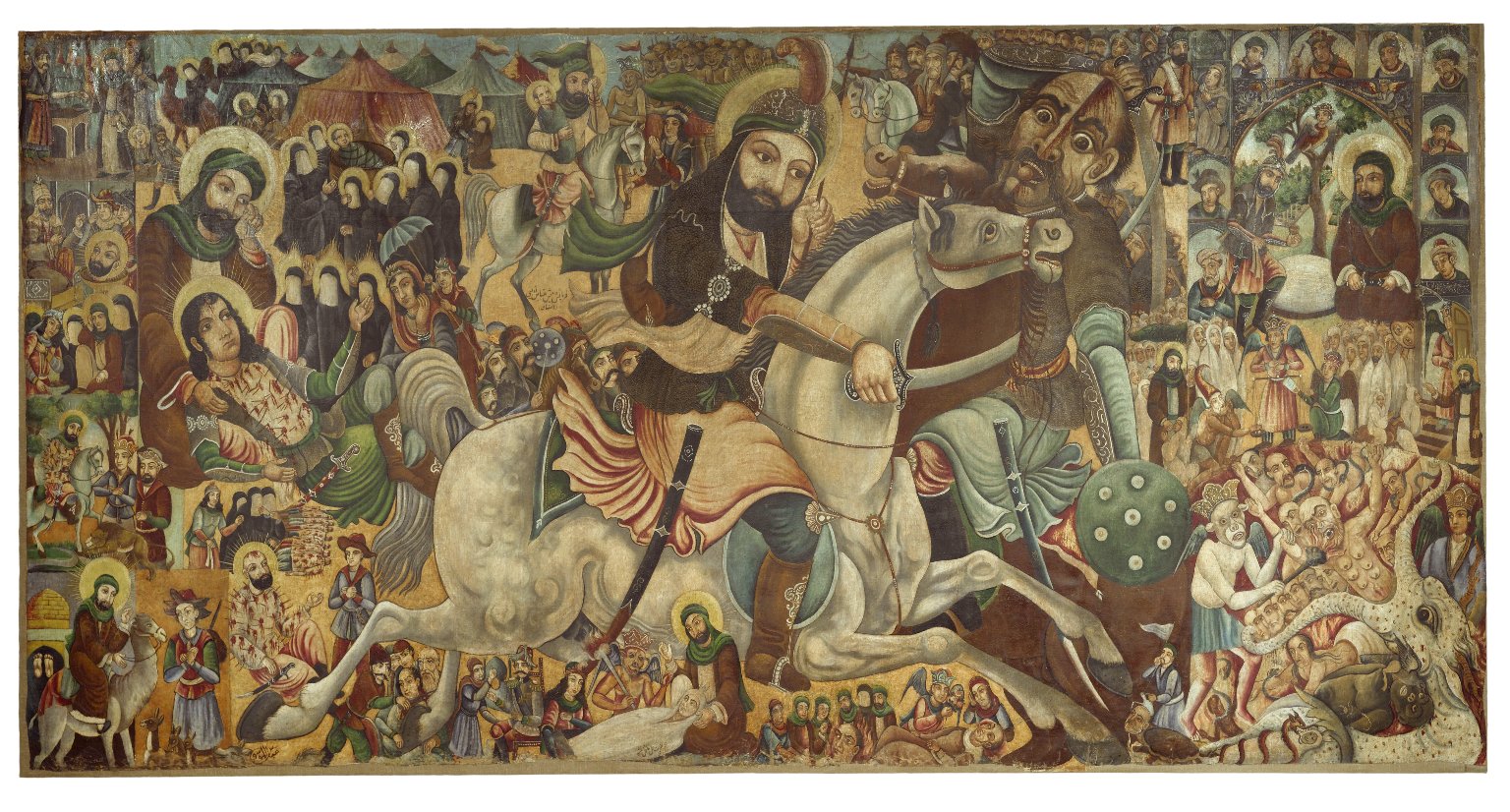
"Karbala is the moment," he told Channel 4 News. "There is a chant that you hear which goes 'Every day is Karbala. We are all Hussein'."
What are the differences today?
Geographically, the Sunni/Shia picture differs across the Middle East and the rest of the world. Sunnis are the more dominant form of Islam - over 80% of Muslims worldwide. Some Sunni dominated countries include Saudi Arabia, Egypt, Turkey and Syria. However, Shia Muslims are the majority in some other countries such as Iran, Iraq, and more recently, the Lebanon.
The ancient split has led to some different practices and approaches to theology being adopted by the different groups - but they share fundamental beliefs such as the "oneness" of Allah, that Muhammad was the last prophet, prayer and fasting.

Today the world’s 1.6 billion Muslims all agree that Allah is the only God and Muhammad his messenger. They follow five ritualistic pillars of Islam, including Ramadan, the month of fasting, and share a holy book, the Koran. But while Sunnis rely heavily on the practice of the Prophet and his teachings (the “sunna”), the Shia see their ayatollahs as reflections of God on earth. This has led Sunnis to accuse Shia of heresy, while Shia point out that Sunni dogmatism has led to extremist sects such as the puritanical Wahhabis. Most Shia sects place importance on the belief that the twelfth and final imam is hidden (called "in occultation") and will reappear one day to fulfill divine will. Meanwhile, their sense of marginalisation and oppression has led to mourning ceremonies such as ashura, when followers flagellate themselves to commemorate Hussein’s death at Karbala.
However, rivalries between the groups exist. The deaths of Ali and Hussein, and the fact that, as the minority, Shias have endured a more unpleasant history of repression, creates a theme of martyrdom throughout Shia history. Sunnis, who often see themselves as the more traditional branch of Islam, have refered to Shias as "rejectors", because of their perceived rejection of tradition.
Western perception is often that the Sunni branch is more extreme than Shi'ism - something increased by the fact that al-Qaeda adopts a Sunni Salafist doctrine.
However, according to Dr Kersten, it is not as simple as that. "It is overly easy to make that kind of distinction," he said. "If you talk about Iran (where Shia are dominant), western opinion doesn't view them as the moderate type. Some of the language that comes out of Iran definitely doesn't fit that view.
"It is more political than anything else. Hezbollah, for example, represents a long-term repressed Shia minority - and they have certainly been becoming more beligerent. "It would be overly easy to say Shias are more moderate than Sunnis. You can find extreme elements on both sides of the equation."
The lines that divide Muslims in the Middle East today are being drawn by politics as much as by religion. The "Shia Crescent" that runs from Iran, through Assad’s regime in Damascus to Hizbullah in Lebanon was once praised by Sunni figures. But the revolutions in the region have pitted Shia governments against Sunni Gulf states such as Saudi Arabia and Qatar, who have supported their co-religionists with cash. This is strengthening Sunni assertivenes target="_blank"s and making the Shia feel more threatened than usual.